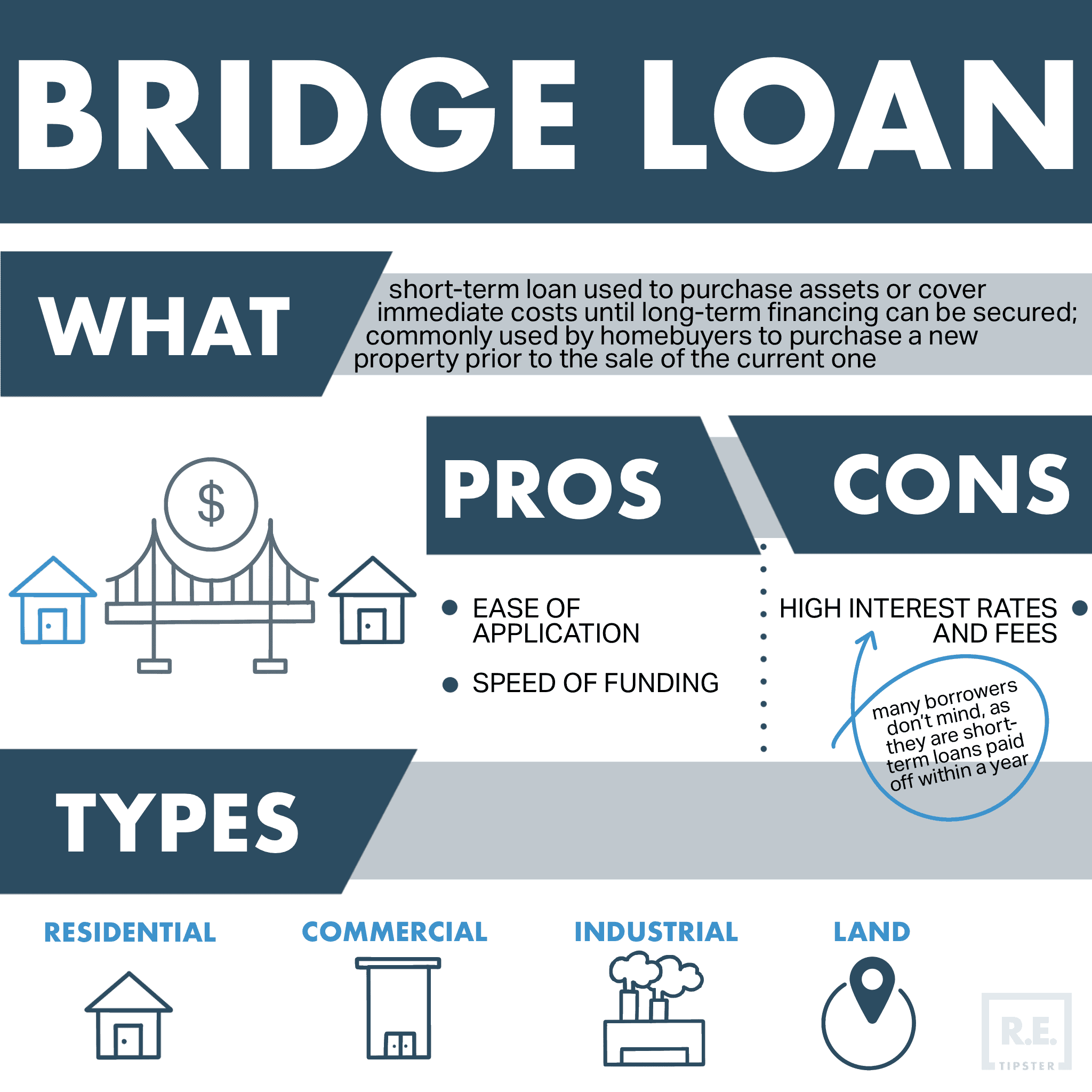
How a bridge loan works
- Application. You describe the property, the purchase or refinance, and your plan to repay the loan (your “exit”).
- Valuation. The lender orders an appraisal or valuation. For a property that needs work, some lenders also consider the expected value after improvements.
- Underwriting. The focus is on the property, the loan-to-value ratio and your exit plan. Credit and experience still matter, but personal income is often less central than for a conventional mortgage.
- Closing and funding. Many bridge lenders can close in a few weeks, which is the main reason investors use them.
- Payments. Payments are usually interest-only, and the full principal is due at the end of the term.
- Exit. You repay by selling the property, refinancing into long-term financing, or using other funds.
What lenders usually look at
- Loan-to-value: many bridge lenders lend up to roughly 65% to 80% of value, depending on the property, your experience and the lender.
- Property type and condition: single-family, small multifamily and mixed-use properties are common. Heavily distressed properties may need a rehab-focused loan instead.
- Credit and experience: a minimum credit score and some track record help, though requirements vary.
- Liquidity: cash for the down payment, closing costs and interest reserves.
- A believable exit: a sales comparison, a lease and rent estimate, or a pre-approval for permanent financing.
Bridge loan or something else?
- Versus a home equity line of credit: a HELOC is usually cheaper but slower to set up, and it is secured by a property you already own rather than the one you are buying.
- Versus a hard money loan: the terms overlap. Hard money lenders focus on the asset and are often used for rehab projects, while bridge loans are sometimes offered by larger or institutional lenders for stabilized properties.
- Versus a fix-and-flip loan: these add rehab funding released in draws. See fix and flip loans.
- Versus a DSCR loan: a DSCR loan is long-term financing that many investors refinance into after a bridge loan.
Risks to plan for
- Interest rates and fees are typically higher than on long-term mortgages.
- If a sale or refinance is delayed, you may owe extension fees or default interest.
- A balloon payment at maturity leaves little room for error.
- If values fall, selling or refinancing may no longer cover the balance.
Checklist before you apply
- Written exit plan with a backup (for example, rent and refinance if a sale stalls).
- Purchase contract or property details and recent comparable sales.
- Proof of funds for the down payment, closing costs and several months of interest.
- Entity documents if you will borrow through an LLC.
- A schedule of other properties you own, with balances.
For a deeper look at costs and exit planning, read Bridge Loans 101.