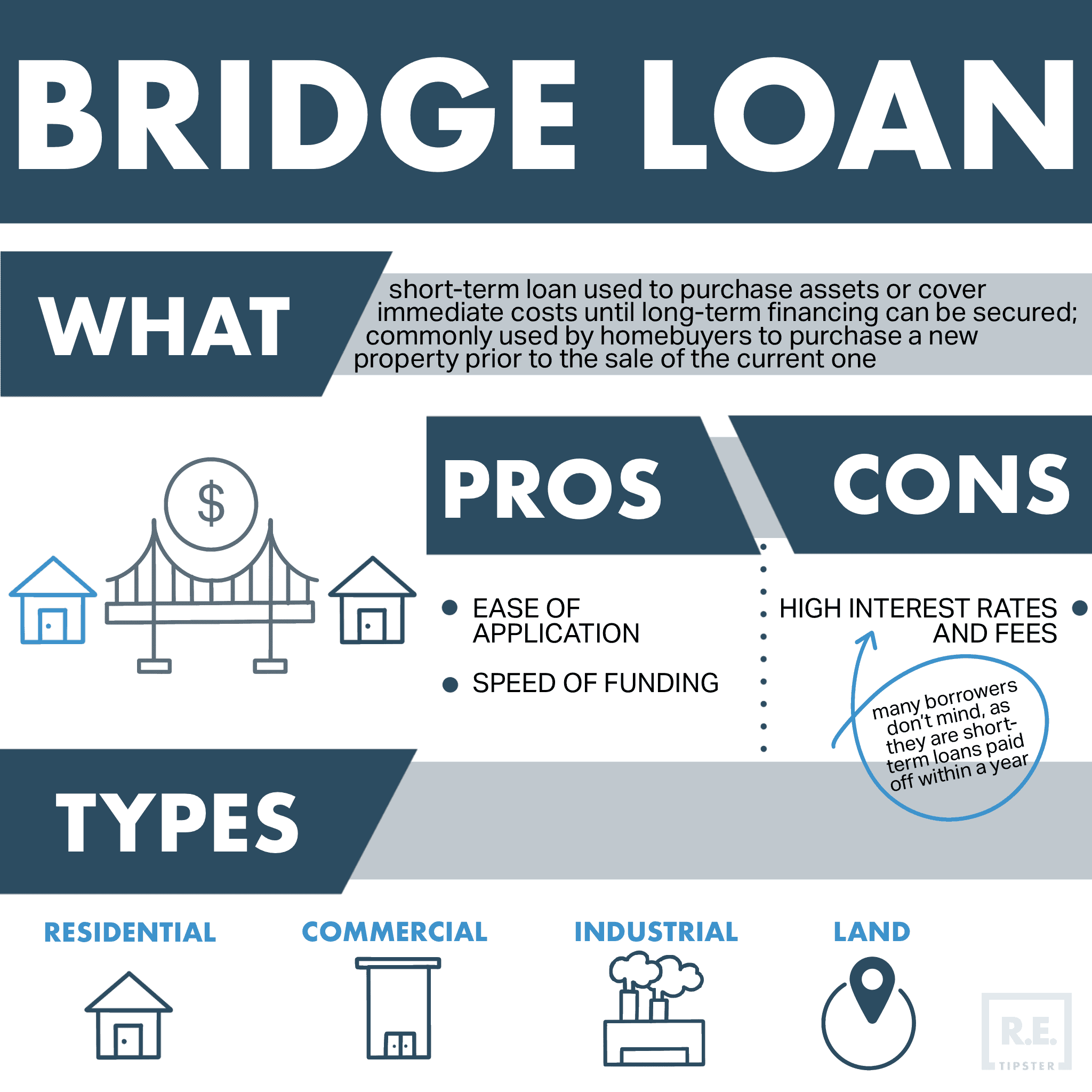
A bridge loan is short-term financing, typically 6 to 24 months, that "bridges" the gap between buying a property and securing longer-term funding or selling it. Investors use bridge loans when speed matters more than the lowest possible rate.
When investors use bridge loans
- Buying a property at auction or on a short closing timeline.
- Acquiring a property that does not yet qualify for long-term financing because it is vacant or needs work.
- Purchasing a new property before selling an existing one.
- Carrying a property through renovation or lease-up, then refinancing into a DSCR or conventional loan.
Typical terms
- Term: usually 6–24 months.
- Interest: higher than long-term mortgages, often interest-only.
- Fees: origination points and closing costs are common.
- Collateral: the property being purchased, and sometimes additional property.
- Underwriting: lenders emphasize the asset's value and your exit plan over your personal income.
The exit strategy matters most
Because the loan is temporary, every lender will ask how you plan to repay it. Common exits are selling the property, refinancing into a long-term loan such as a DSCR loan, or paying off the balance with proceeds from another sale. Build in extra time in case a sale or refinance runs late.
Risks to weigh
- Higher total cost than permanent financing.
- Balloon repayment at maturity.
- Possible extension fees if your exit is delayed.
- A falling market can make a sale or refinance harder than planned.
Read more on our Bridge Loans page, or see how a fix and flip loan compares.
What a bridge loan can cost: an illustration
Using made-up figures: a $300,000 interest-only bridge loan at 10% for nine months produces interest of about $22,500 ($300,000 × 10% × 0.75). Two origination points add $6,000. Appraisal, title and other closing costs come on top. The financing costs are therefore roughly $28,500 or more over the term, before any extension fees. Actual rates, points and fees vary widely.
The question to ask is whether the profit from acting quickly, or the value of avoiding a forced sale, is larger than that cost.
Planning your exit
- Sell: use recent comparable sales and a realistic time on market. Add a few months of cushion.
- Refinance: check the loan-to-value, rent and credit requirements of the long-term loan you expect to get, such as a DSCR loan. Some require a property to be leased for a period first.
- Repay from other funds: make sure those funds are certain, not hoped for.
Choose a term longer than your best-case timeline, and ask what an extension costs before you sign.
Questions to ask a bridge lender
- What are the interest rate, points and all other fees?
- Is there a minimum interest period or prepayment penalty?
- What are the extension terms and costs?
- Is the loan recourse, and what collateral do you require?
- How long does funding take after approval?
Frequently asked questions
How fast can a bridge loan close? Many close in a few weeks, which is the main reason to use one, but timelines depend on the lender and the property.
Can I get a bridge loan on a property that needs work? Sometimes. If major repairs are needed, a rehab-focused fix and flip loan may fit better.
What happens if I cannot repay on time? Ask about extensions before closing. Missing the maturity date can bring default interest, fees and, ultimately, foreclosure.
Run your numbers
Check whether a property meets typical lender coverage requirements.
Open the DSCR Calculator Compare DSCR LendersThis article is for educational purposes only and is not financial advice. Terms vary by lender; confirm current requirements before applying.